5 days
Daily Tour
16 people
___
The Sandakphu Trek is one of the most scenic and rewarding trekking experiences in the Eastern Himalayas. Unlike the western Himalayan ranges, Sandakphu lies at a lower latitude, creating breathtaking sunrise and sunset skies during winters. The trek takes you along parts of the historic Silk Route, offering stunning views of some of the world’s highest mountain peaks while allowing you to experience the warm hospitality of the Nepalese and Sikkimese communities along the trail.
As you journey through the famous Singalila National Park, you’ll witness dense Himalayan forests filled with orchids, magnolias, rhododendrons, and diverse wildlife. One of the most memorable moments of the trek is enjoying an early morning cup of tea while admiring the majestic Kanchenjunga range and the famous “Sleeping Buddha” formation shaped by the Himalayan peaks.
Located at an elevation of approximately 11926\ \text{ft}, Sandakphu is the highest point in West Bengal’s Darjeeling district and sits along the India–Nepal border. The trail follows the scenic Singalila Ridge, which forms the natural boundary between Nepal and the Indian regions of Sikkim and Darjeeling. Because of this, the trek is also popularly known as the “Singalila Ridge Trek.”
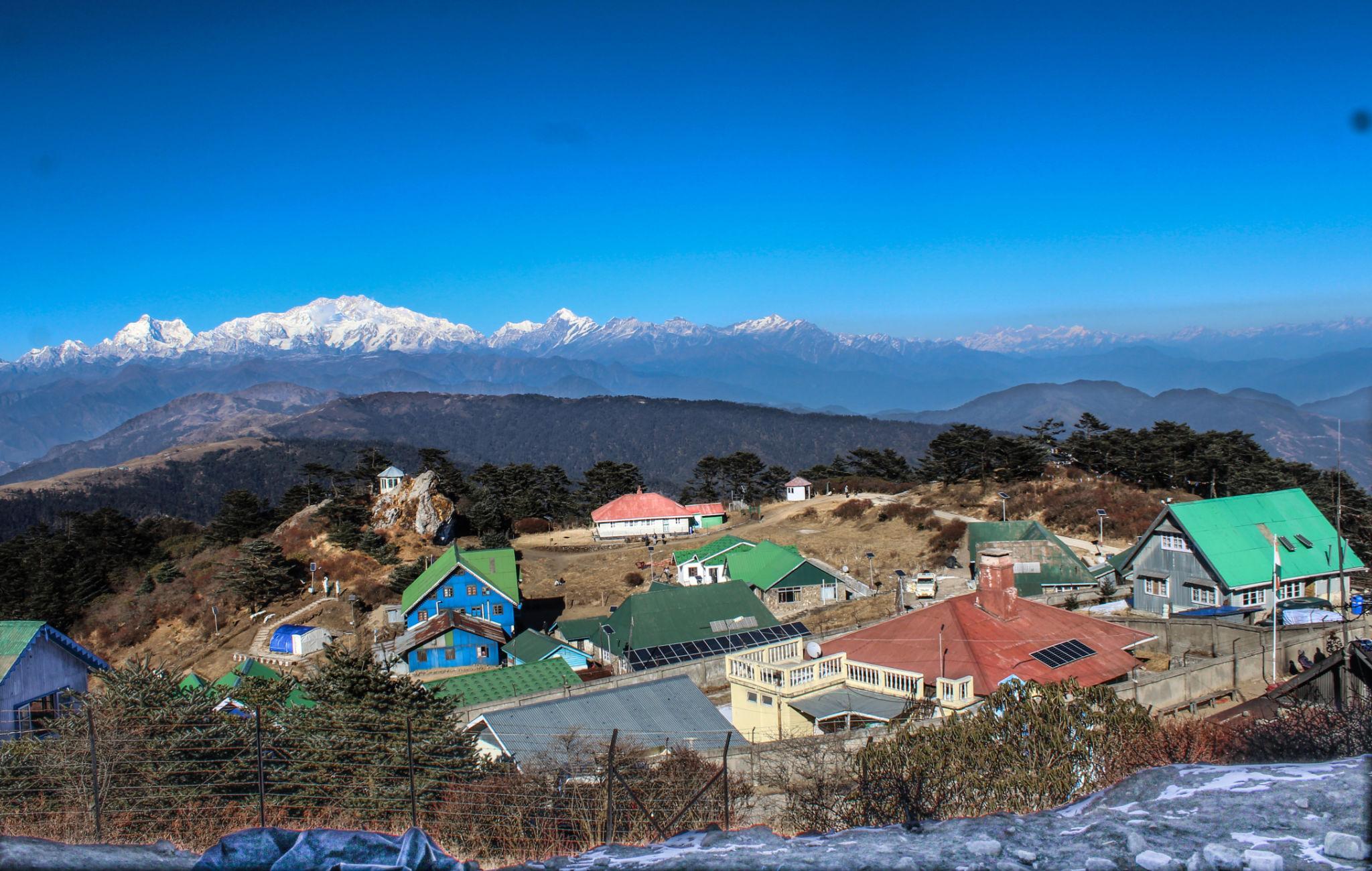
The panoramic views from Sandakphu are among the biggest highlights of the journey. On clear days, trekkers can witness breathtaking views of Kanchenjunga, Everest, Lhotse, Makalu, Jannu (Kumbhakarna), Chamlang, Baruntse, and several peaks of Sikkim and Nepal. The route also passes through remote Himalayan villages, offering a peaceful and culturally immersive trekking experience.
The Sandakphu Trek is considered ideal for beginners looking to experience Himalayan trekking for the first time. Despite being beginner-friendly, even experienced trekkers return frequently for its unique landscapes, scenic trails, and overall trekking experience. The trail stretches approximately 33 km from Manebhanjan to Sandakphu, with an altitude gain of around 5500\ \text{ft}. The terrain includes steep gradients, winding paths, forests, ridges, and mountain landscapes that make the journey both adventurous and exciting.
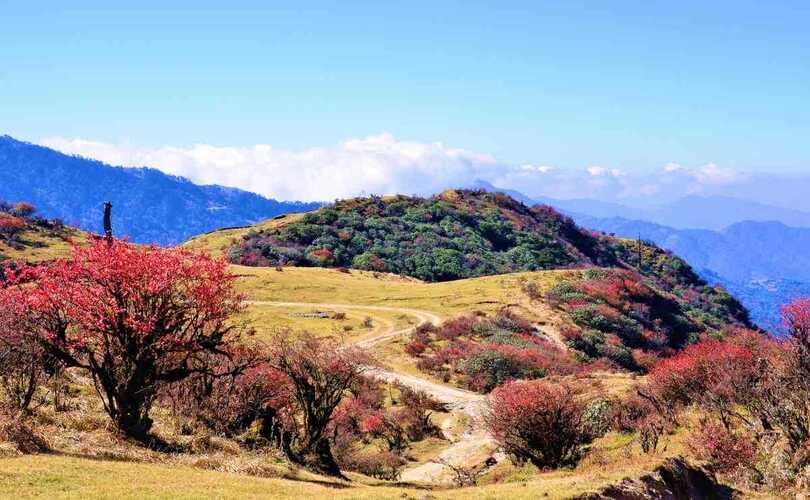
The forests of Singalila National Park are also home to several species of birds and rare wildlife, including the endangered Red Panda. Although sightings are uncommon, trekkers may occasionally spot them near Gairibas or along the route towards Gurdum. During spring, blooming rhododendrons and magnolias transform the forests into vibrant shades of red, pink, and white, filling the mountain air with a refreshing floral fragrance and creating a magical trekking atmosphere.
While the altitude on this trek is lower compared to regions like Ladakh or some western Himalayan trails, trekkers can still experience mild altitude-related symptoms due to the rapid elevation gain. Common issues may include headaches, breathing discomfort, cold, or fatigue. These can generally be managed with proper acclimatization, hydration, and guidance from experienced trek leaders. It is always advisable to inform your trek leader immediately if you experience any discomfort during the journey.
Sandakphu trek can be best experienced across 8 months of the year, except for the rainy season that is between months from May to August. With the Rhododendrons and magnolias in the spring to the panoramic views of landscapes with crisp golden autumn leaves and finally to the mild cold, snow-covered landscapes in winter; this trek has a new flavour to it every season. You can view a vast variety of flora and fauna from season to season.
Sandakphu remains accessible for a good duration of 8 months throughout the year, however, it remains closed throughout the monsoon season, from May to August due to unfavourable climatic conditions.
With the beginning of spring season in March, beautiful Rhododendrons and magnolias begin to bloom. The landscapes are painted with shades of red, pink and white colours which indeed appear to be majestic and appealing. During the latter half of the season, rainfall can be experienced occasionally which makes it difficult for trekkers to carry on their journey. The area starts receiving heavy rainfall by mid-April which mostly brings all activities to halt.
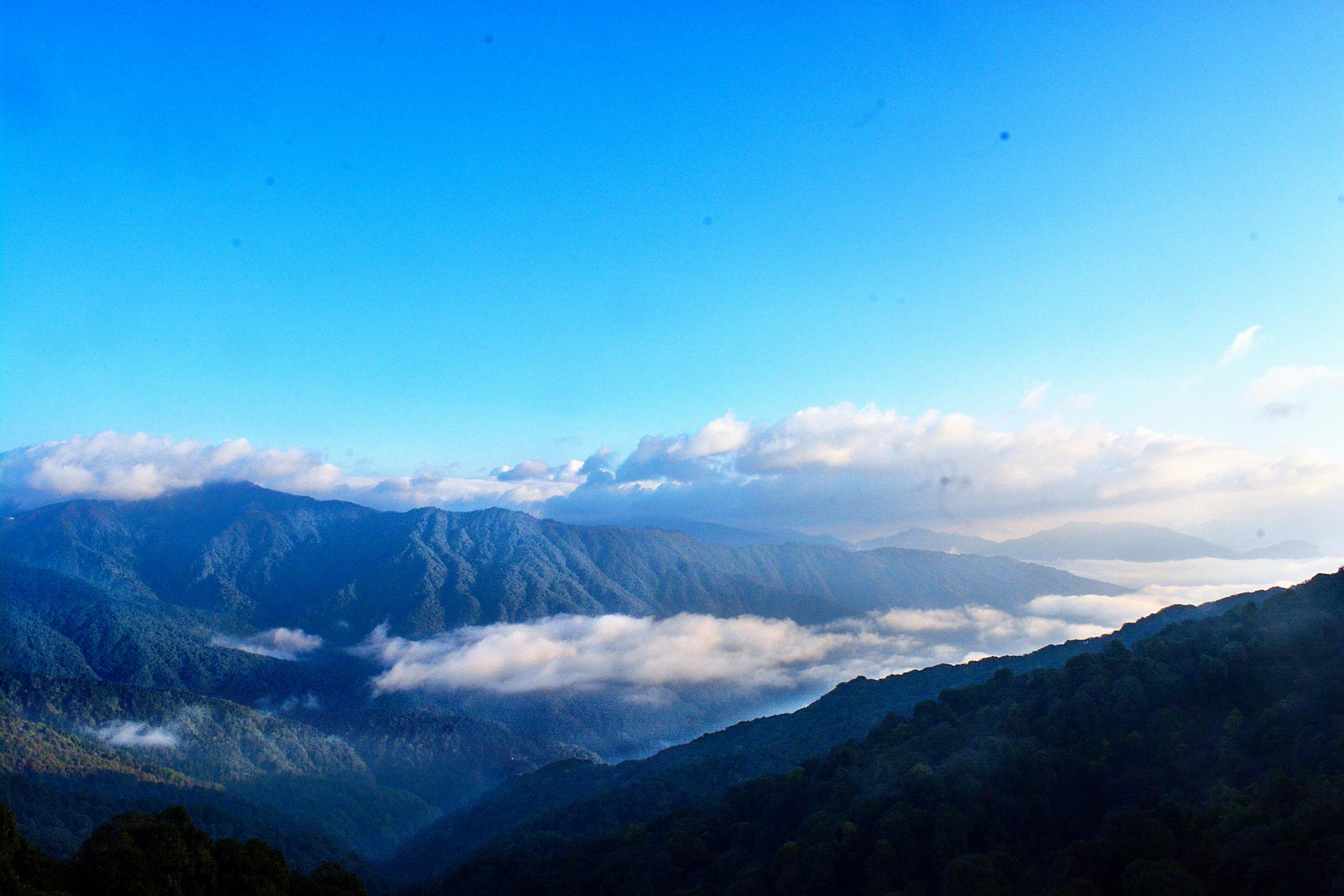
Autumn in Sandakphu begins during the last week of September and continues until November, making it one of the best seasons to experience the trek. During this time, the weather remains pleasant with fresh mountain air, sunny days, and clear skies that beautifully highlight the surrounding Himalayan landscapes.
With the monsoon rains completely gone, the region opens up to stunning panoramic views under bright blue skies. The mountain vistas during autumn are especially breathtaking, and the golden hues during sunrise and sunset create some of the most memorable moments of the trek.
This season is also ideal for birdwatching around Singalila National Park, as a variety of bird species can be spotted across the forests and trails. October is particularly popular among trekkers, attracting a large number of visitors to the region. For those looking to enjoy the beauty of autumn with fewer crowds, November and the early winter period are considered the perfect time to experience the trek peacefully while still enjoying the best seasonal views.
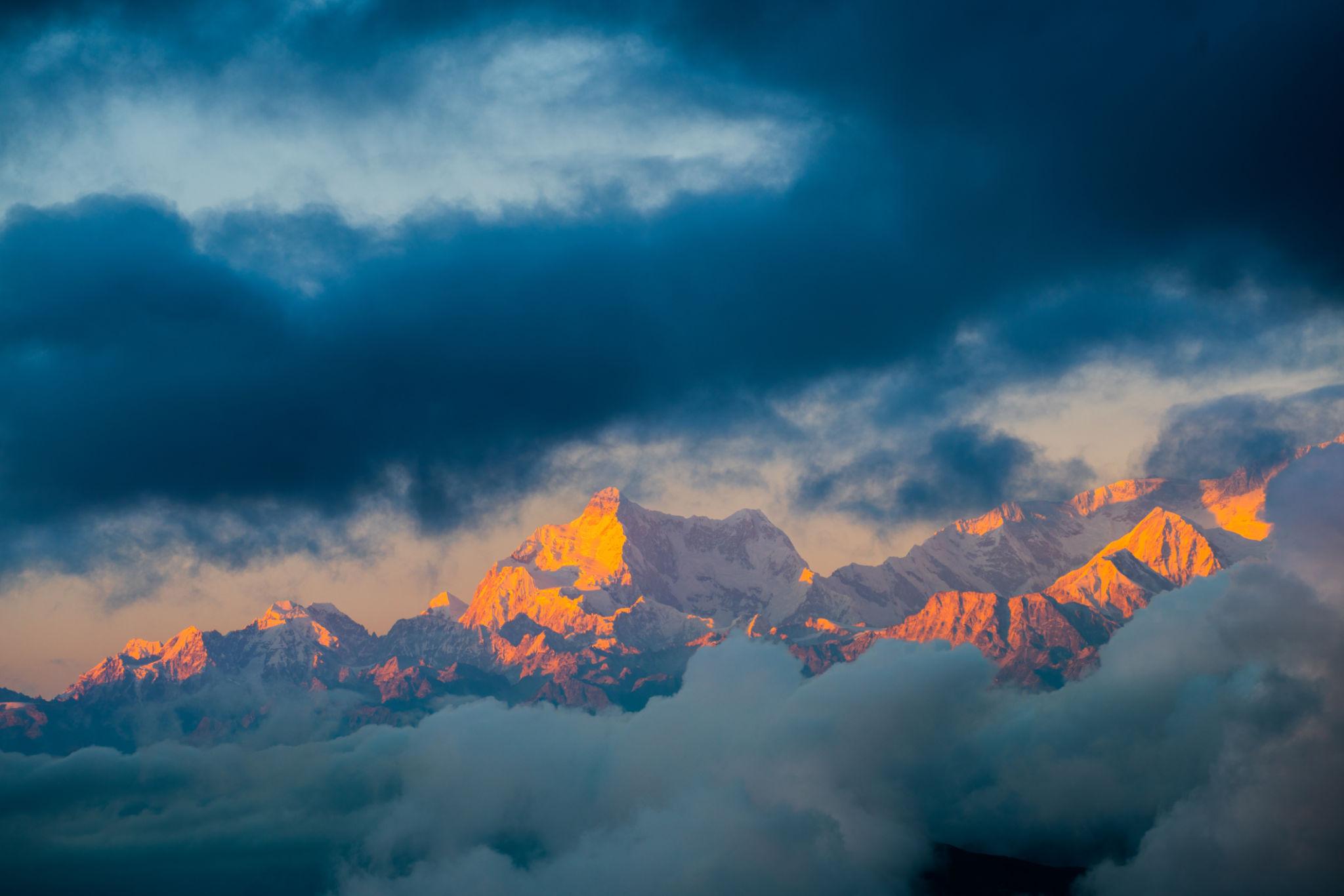
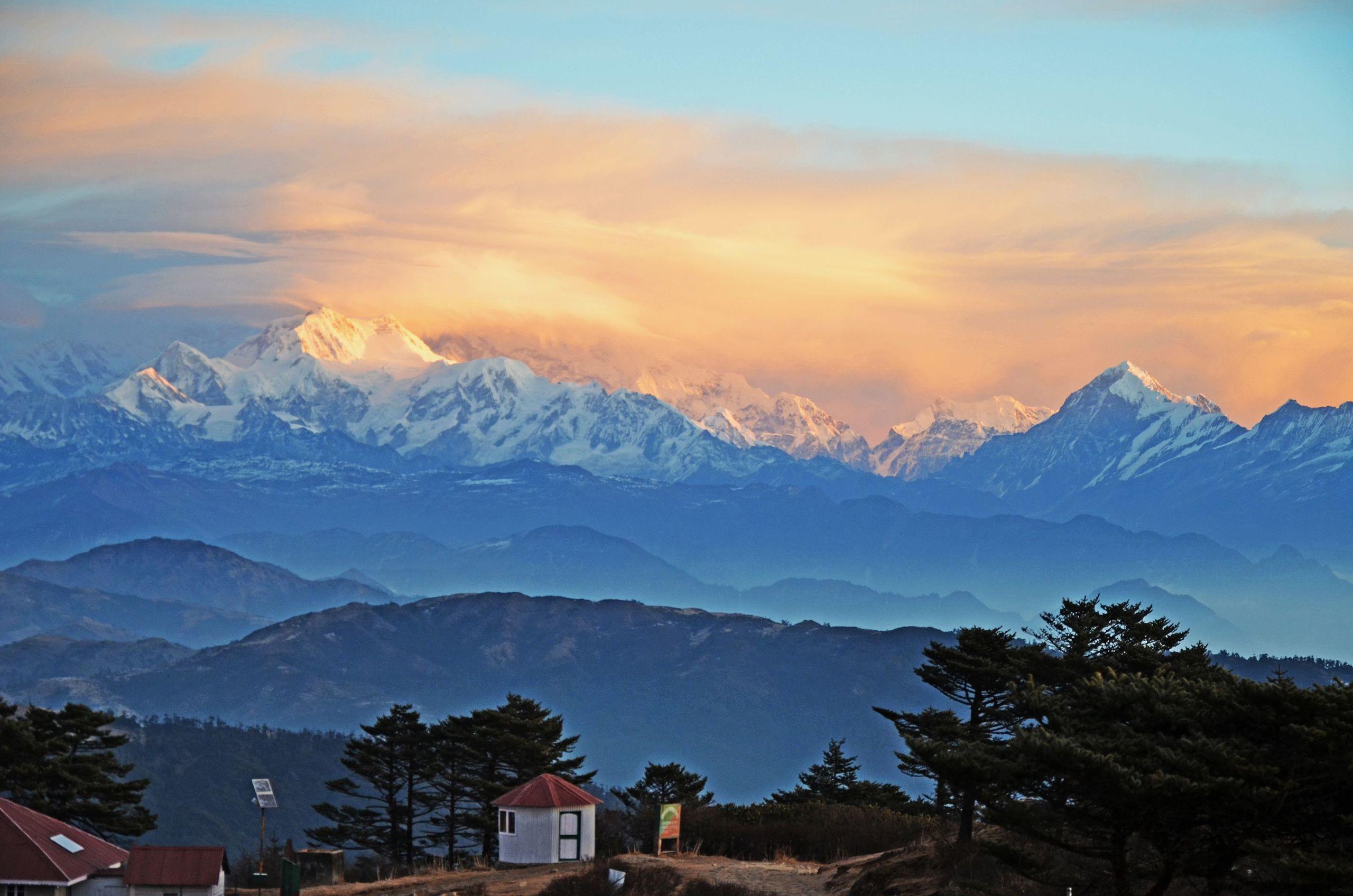
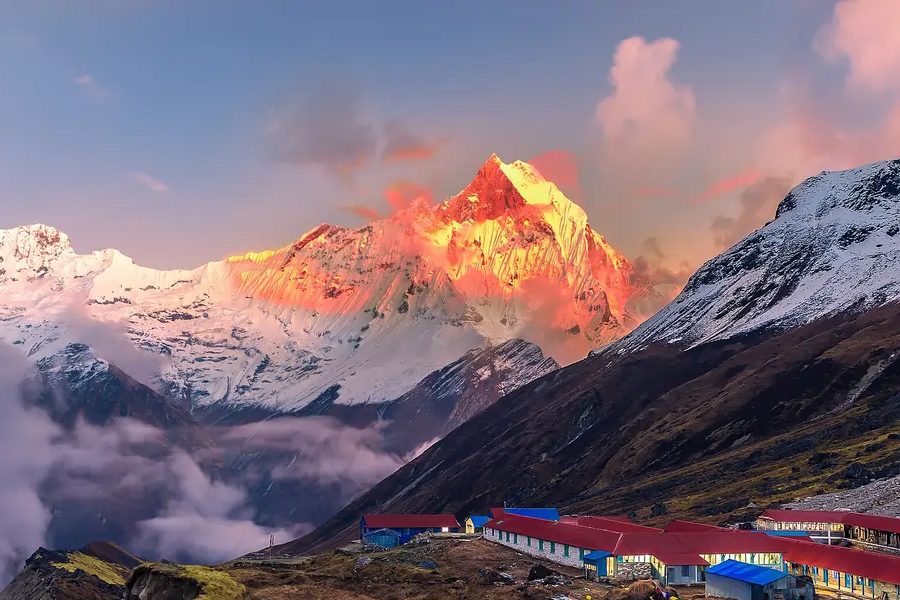
Sandakphu, in reality, is a trek recognized for its sunrises and sunsets. There are not many trekking regions where you can find surreal and magical sunsets/sunrises. The inherent romance in snowfall also adds value to the overall winter trekking experience that everyone dreams to witness once in their lifetime. The Snowfall here is mild and just about the perfect texture.
Wake up to a magical Himalayan morning on Day 3 as Tumling greets you with one of the most breathtaking sunrises of the trek. Watch the sky slowly light up in stunning shades of red and orange as the first rays of sunlight illuminate the majestic Kanchenjunga range. In the distance, you may also spot prominent peaks such as Kumbhakarna, Shimbho, Goecha, the Kabru peaks, Rathong, Koktang, and Frey standing proudly across the Himalayan skyline.
After breakfast, the trek continues towards the beautiful forests of Singalila National Park on your way to Kalipokhri. As you gradually ascend, the trail becomes more vibrant with blooming rhododendrons and magnolias adding colour to the surrounding forests.
The first stop of the day is Gairibas, a peaceful Himalayan settlement located close to the Nepal border. Surrounded by calm mountain landscapes, it offers the perfect place to relax briefly before continuing the journey ahead.
From Gairibas, the trail climbs steeply towards Kaiyakatta, a small yet charming settlement located around 2 km away. The ascent usually takes about an hour of steady trekking. Here, you can pause for a delicious lunch break while enjoying the peaceful atmosphere far away from busy city life.
After lunch, the trek continues towards Kalipokhri, the final destination for the day. Although it lies only around 4 km from Kaiyakatta, the gradual ascent can take some time. This stretch of the trail becomes even greener and more scenic, with opportunities to spot several species of birds, including migratory birds found within the region.
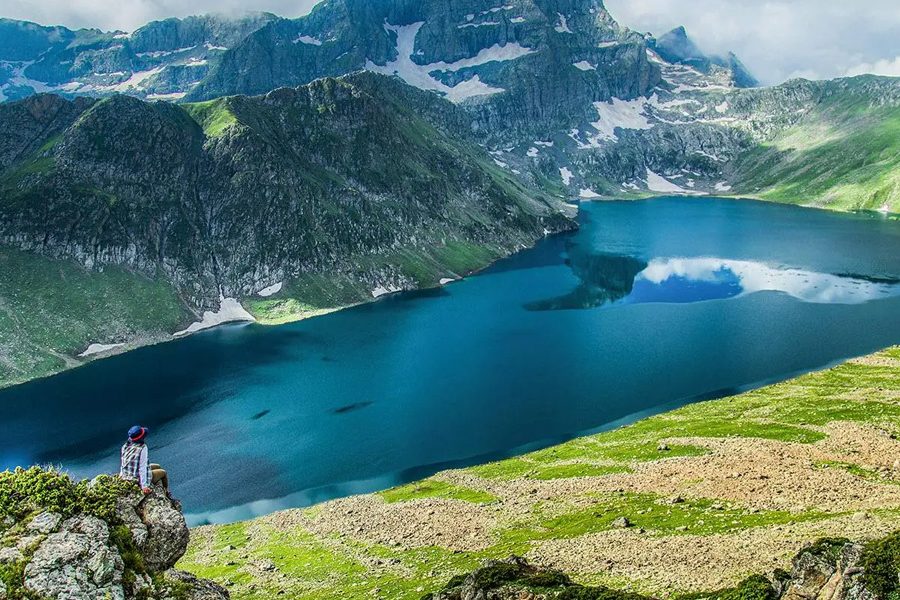
Within a couple of hours, you will arrive at the beautiful Kalipokhri, known for its famous black-water lake surrounded by colourful Tibetan prayer flags fluttering in the mountain breeze. The peaceful setting, along with the nearby Buddhist temple and misty Himalayan atmosphere, creates a truly breathtaking and unforgettable experience.

Member Since 2026